


PRK: The No-Flap Path to Clear Vision
PRK delivers the same lasting visual freedom as LASIK — without creating a corneal flap. Ideal for patients with thin corneas, active lifestyles, or occupations where flap-free correction is preferred.
No Corneal Flap
Eliminates all flap-related risks — ideal for contact sports & active lifestyles
Same Long-Term Results as LASIK
Identical excimer laser reshaping — 20/20 or better for most patients
Option for Thin Corneas
Patients who don’t qualify for LASIK may be excellent PRK candidates
What Is PRK Eye Surgery?
PRK — photorefractive keratectomy — is a laser vision correction procedure that reshapes the cornea to correct nearsightedness, farsightedness, and astigmatism. It was actually the first laser eye surgery approved by the FDA, predating LASIK by several years, and remains one of the most proven and effective refractive procedures available today.
PRK and LASIK share a common goal: using an excimer laser to reshape the cornea so that light focuses precisely on the retina, producing clear vision without glasses or contacts. The critical difference is how the corneal surface is prepared before the laser does its work.
In LASIK, a femtosecond laser creates a thin flap in the outer layer of the cornea. That flap is lifted, the excimer laser reshapes the tissue underneath, and the flap is repositioned. In PRK, no flap is created at all. Instead, the thin outer layer of the cornea (the epithelium) is gently removed, and the excimer laser reshapes the corneal surface directly. The epithelium then regenerates naturally over several days, aided by a protective bandage contact lens placed on the eye after the procedure.
Because PRK doesn’t involve creating a corneal flap, it preserves more of the cornea’s structural integrity. This makes PRK an important alternative to LASIK for patients with thinner corneas, patients in occupations where a corneal flap could be displaced by physical impact, and patients who simply prefer a no-flap approach to vision correction.
At Westlake Eye Specialists, our board-certified ophthalmologists perform PRK using the same advanced excimer laser platform used for our LASIK procedures, delivering identical levels of precision and customization to every PRK patient.
PRK vs. LASIK: How They Compare
Both procedures use the same excimer laser to correct your vision. The difference is in the preparation — and the recovery.

PRK
LASIK
The bottom line: PRK and LASIK produce the same long-term visual results. The tradeoff is recovery speed. LASIK patients typically see well within hours and return to work the next day. PRK patients need five to seven days for the epithelium to heal and functional vision to return, with full visual stabilization occurring gradually over one to three months. However, PRK eliminates all flap-related concerns entirely — making it the procedure of choice when corneal thickness, occupation, or lifestyle factors make a flap inadvisable.
Your surgeon at Westlake Eye Specialists will help you determine which procedure offers the best combination of safety, visual quality, and practicality for your individual situation. In many cases, the decision is clear-cut based on your diagnostic results. Learn more about LASIK eye surgery or explore all of our vision correction alternatives.
The PRK Procedure Step by Step
From pre-operative preparation to your final follow-up, here’s exactly what happens during PRK at Westlake Eye Specialists.
Comprehensive Eye Evaluation
Your journey starts with a thorough diagnostic workup at our Westlake Austin clinic — including corneal topography, Pentacam® mapping, pachymetry, wavefront analysis, tear film assessment, and a detailed eye health exam. This evaluation determines whether PRK, LASIK, EVO ICL, or another approach is the best fit for your eyes.
Epithelial Removal
On the day of surgery at our South Austin surgical center, numbing drops are applied for complete comfort. Your surgeon then gently removes the thin outer layer of the cornea (the epithelium) — a layer that naturally regenerates within several days. Unlike LASIK, no corneal flap is created during this step.
Excimer Laser Reshaping
With the epithelium removed, the excimer laser precisely reshapes the corneal surface according to your unique wavefront-guided treatment plan. This is the same laser platform and the same customized ablation profile used in our LASIK procedures — the vision correction step is identical. The laser treatment takes only seconds per eye.
Bandage Contact Lens & Healing
After the laser treatment, a soft bandage contact lens is placed on the eye to protect the corneal surface and promote comfortable healing. This lens stays in place for approximately five to seven days while the epithelium regenerates. You’ll use medicated drops and artificial tears during this period.
Follow-Up & Visual Stabilization
You’ll return for follow-up visits at one day, approximately one week (for bandage lens removal), one month, and three months post-surgery. Vision improves progressively as the epithelium heals — most patients achieve functional driving vision within one to two weeks, with continued refinement over the following months.
Who Is a Good Candidate for PRK in Austin?
PRK is an excellent choice for patients who want permanent laser vision correction but may not be ideal candidates for LASIK — or who prefer a procedure that doesn’t involve creating a corneal flap. During your evaluation at Westlake Eye Specialists, your surgeon will determine whether PRK, LASIK, EVO ICL, or Refractive Lens Exchange offers the best outcome for your specific eyes.
PRK May Be Ideal If You Have:
- Thinner corneas that don’t leave adequate tissue for LASIK flap creation
- An active lifestyle involving contact sports, martial arts, or high-impact activities
- A career in military, law enforcement, or firefighting where no-flap correction may be required or preferred
- Mild to moderate nearsightedness, farsightedness, or astigmatism
- Corneal surface irregularities that make LASIK flap creation less advisable
- A stable prescription for at least 12 months
- The ability to accommodate a longer recovery period (5–7 days vs. 1–2 for LASIK)
Consider Another Option If:
- You have a very high prescription — EVO ICL may deliver better quality of vision for extreme myopia
- You need the fastest possible recovery — LASIK offers functional vision within hours
- You’re over 45 with presbyopia — Refractive Lens Exchange addresses both distance and near vision
- You have significant dry eye disease — PRK can temporarily worsen dryness during healing
Board-Certified Austin Eye Surgeons
PRK at Westlake Eye Specialists is performed exclusively by board-certified ophthalmologists with deep refractive surgery expertise.

Zarmeena Vendal, M.D.
Board-certified, Harvard-trained ophthalmologist with over two decades of refractive, cataract, and glaucoma surgery experience. Voted Austin Top Doc in multiple consecutive years.
Meet Dr. Vendal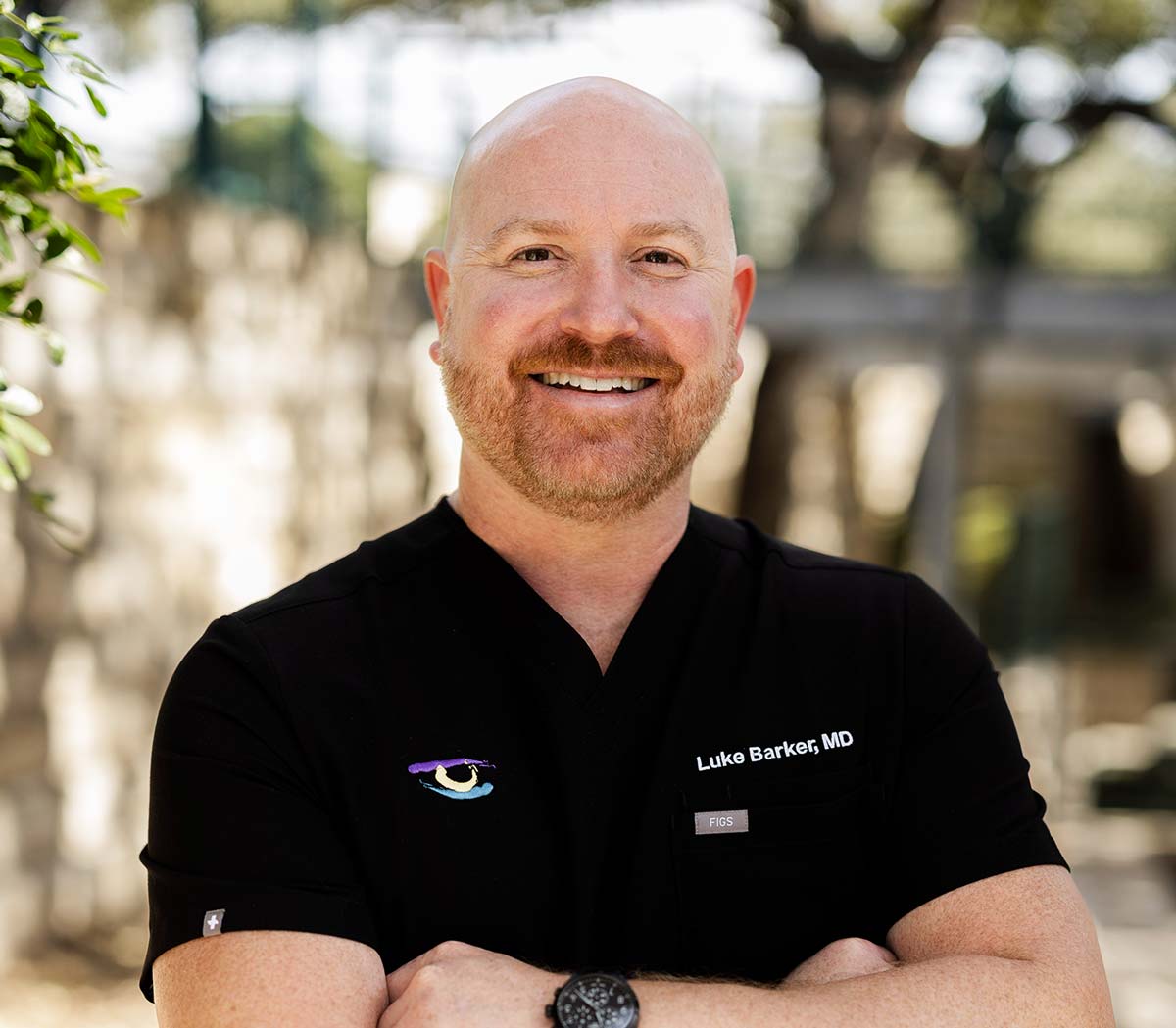
Luke Barker, M.D.
Board-certified Diplomate of the American Board of Ophthalmology. Over 25,000 vision correction procedures. Previously the lead refractive surgeon at Mann Eye Institute in Austin for nearly a decade.
Meet Dr. BarkerPRK Recovery: What to Expect After Surgery
PRK recovery takes longer than LASIK because the epithelium — the outer layer of the cornea — needs time to regenerate after being removed during the procedure. While the final visual outcome is the same, the path to get there requires more patience. Here’s a realistic timeline of what Austin PRK patients can expect.
Days 1–3: The Healing Phase
The first two to three days are the most uncomfortable part of the PRK experience. As the epithelium begins to regenerate, patients commonly experience a moderate burning or stinging sensation, light sensitivity, tearing, and blurry vision. These symptoms are managed with prescribed pain medication, anti-inflammatory eye drops, and frequent use of preservative-free artificial tears. Most patients find that staying in a dimly lit room, resting, and keeping their eyes closed helps significantly. A bandage contact lens placed by your surgeon protects the healing surface during this period.
Days 4–7: Turning the Corner
By day four, most patients notice that discomfort has significantly decreased. The epithelium is actively regenerating and beginning to cover the treated area. Vision is still blurry and fluctuating at this stage — this is completely normal. You’ll return to our office around day five to seven for a check, and in most cases, the bandage contact lens is removed once the epithelium has sufficiently healed.
Weeks 2–4: Functional Vision Returns
Most PRK patients achieve functional vision — clear enough to drive and work comfortably — within two to three weeks. Some patients recover faster, and some take a bit longer. Vision continues to improve incrementally during this phase as the new epithelium smooths and stabilizes. You’ll have a follow-up visit at approximately one month.
Months 1–3: Full Stabilization
Final visual acuity after PRK typically stabilizes between one and three months post-surgery. During this period, you may notice gradual sharpening and clarifying of vision, especially in low-light conditions. A three-month follow-up visit confirms your final results. The vast majority of PRK patients achieve 20/20 vision or better — the same long-term outcomes as LASIK patients.
PRK Recovery vs. LASIK Recovery
The longer recovery is the primary tradeoff of choosing PRK over LASIK. LASIK patients typically see well within hours and return to work the next day. PRK patients need about a week off from work and two to three weeks for functional vision to stabilize. If recovery speed is a priority and your corneas support LASIK, your surgeon may recommend LASIK instead. If corneal thickness, occupation, or lifestyle makes a no-flap approach the smarter choice, PRK delivers the same outstanding visual result with a bit more patience during healing.
PRK Cost in Austin, TX
PRK pricing at Westlake Eye Specialists is comparable to our LASIK pricing and includes comprehensive pre-operative diagnostics, the procedure itself, surgeon fees, all post-operative visits (which are more numerous for PRK than LASIK due to the longer healing timeline), medicated drops, and the bandage contact lens.
Use our Vision Correction Pricing Calculator for a personalized estimate based on your prescription and the procedure your surgeon recommends. We also offer flexible financing options with low monthly payments to make vision correction accessible.
Because PRK and LASIK produce identical long-term visual outcomes, the pricing decision should never drive the clinical choice between the two procedures. Your surgeon will recommend whichever procedure is safest and most effective for your individual eyes — and the cost will be transparent and fully explained before you make a commitment.
Not a PRK Candidate? Other Options We Offer
Westlake Eye Specialists is a full-spectrum refractive practice, which means we offer every major vision correction procedure — not just one. If your evaluation determines that PRK isn’t the best fit for your eyes, our surgeons can recommend proven alternatives:
- LASIK — If your corneas have adequate thickness and your lifestyle doesn’t require flap-free correction, LASIK offers the same visual outcomes with a significantly faster recovery.
- EVO ICL (Implantable Collamer Lens) — A biocompatible lens implanted behind the iris that corrects severe myopia up to -20.00D without removing any corneal tissue. Ideal for high prescriptions, thin corneas, or patients with dry eye. Reversible.
- Refractive Lens Exchange (RLE) — Replaces the natural lens with a premium IOL using the same technique as cataract surgery. Best for patients over 45 who want to correct both distance and near vision while eliminating the possibility of future cataracts.
Explore all LASIK alternatives we offer, or take our Vision Correction Self-Test to get a preliminary recommendation before your consultation.
PRK Frequently Asked Questions
Does PRK hurt?
The procedure itself is painless — numbing drops are applied beforehand. During recovery, you’ll experience moderate discomfort for two to three days as the epithelium heals. This is managed with prescribed drops and pain medication. Most patients describe the discomfort as a gritty, burning sensation that peaks around day two and improves significantly by day four.
How long does it take to see well after PRK?
Functional vision (clear enough for driving and daily tasks) typically returns within two to three weeks. Full visual stabilization occurs between one and three months. This is longer than LASIK, where most patients see well within hours — but the final visual outcome is the same.
Is PRK safer than LASIK?
Both procedures have excellent safety profiles. PRK’s primary safety advantage is the elimination of flap-related complications — the corneal flap is the most unique risk factor in LASIK. However, LASIK’s faster healing means less time for potential surface healing complications. For most patients, both options are equally safe, and your surgeon will recommend whichever is most appropriate for your specific anatomy.
Why would my surgeon recommend PRK instead of LASIK?
The most common reason is corneal thickness — PRK requires less tissue than LASIK because no flap is created. Your surgeon may also recommend PRK if you have corneal surface irregularities, a career that requires no-flap correction (military, law enforcement, firefighting), or an active lifestyle involving contact sports or high-impact activities.
How much does PRK cost in Austin?
PRK pricing is comparable to LASIK and includes all diagnostics, the procedure, surgeon fees, and post-operative care. Use our Pricing Calculator for a personalized estimate, and explore financing options for affordable monthly payments.
Can I have PRK if I have dry eyes?
Mild dry eye can usually be managed. However, PRK can temporarily worsen dryness during the healing process, so significant dry eye may need to be treated at our Austin Dry Eye Center before proceeding. For patients with severe dry eye, EVO ICL may be a better option since it preserves the corneal surface entirely.
How long do I need to take off work after PRK?
Plan for five to seven days away from work, especially if your job requires significant screen time or sharp vision. Some patients with less visually demanding jobs return sooner. By two weeks, most patients are functioning comfortably in daily life with vision continuing to improve.
Is PRK permanent?
Yes — PRK permanently reshapes the cornea. Like LASIK, it cannot prevent age-related changes such as presbyopia (reading glasses after 40) or future cataracts, but the distance correction itself is lasting.
Find Out If PRK Is Right for You
Schedule your vision correction consultation and let our surgeons determine the best path to clear, lasting vision for your eyes.
(512) 472-4011