


See Austin Without Limits
All-laser, bladeless LASIK from board-certified surgeons with thousands of successful procedures. Experience the freedom of clear vision — from Lady Bird Lake to the Hill Country and everything in between.
What Is LASIK Eye Surgery?
LASIK — laser-assisted in situ keratomileusis — is the most widely performed elective vision correction procedure in the world. Since receiving FDA approval in the late 1990s, LASIK has been performed on tens of millions of patients globally, and it remains the gold standard for correcting refractive errors like nearsightedness (myopia), farsightedness (hyperopia), and astigmatism.
The procedure works by using an advanced laser system to permanently reshape the cornea — the clear front surface of the eye — so that light focuses precisely on the retina. When the cornea is shaped correctly, images arrive in sharp focus without the need for glasses or contact lenses. For most patients, the result is 20/20 vision or better.
What makes modern LASIK in Austin so remarkable is both its speed and its predictability. The actual laser treatment takes only seconds per eye. The entire procedure — both eyes — is completed in approximately 15 minutes. Most patients experience dramatically improved vision within hours, return to work the next day, and describe the experience as one of the best decisions they've ever made.
At Westlake Eye Specialists, we exclusively perform all-laser, bladeless LASIK using the latest-generation femtosecond and excimer laser technology. This means no microkeratome blades, no compromises on precision, and the highest standard of safety available in refractive surgery today. If you've been considering LASIK in Austin, South Austin, or anywhere in the Central Texas area, our team is here to guide you through every step of the process.
Not All LASIK Is Created Equal
The difference between a good LASIK outcome and an exceptional one comes down to three things: surgeon experience, technology in the room, and whether your practice honestly evaluates whether LASIK is truly right for your eyes.
Board-Certified Surgeons
Our LASIK surgeons are fellowship-trained, board-certified ophthalmologists — not optometrists co-managing your care remotely. Your surgeon is in the room for every step of every procedure.
All-Laser Bladeless Technology
We exclusively perform bladeless LASIK surgery using femtosecond laser flap creation. No microkeratome blades, no shortcuts. Greater precision and more predictable results.
Full-Spectrum Vision Correction
If LASIK isn't ideal for your eyes, we offer EVO ICL, PRK, Refractive Lens Exchange, and other LASIK alternatives. A LASIK-only practice will always recommend LASIK. We recommend what's best for you.
Austin's Best Eye Surgeons for LASIK
Your LASIK result is only as good as the surgeon performing the procedure. Both of our LASIK surgeons bring fellowship-level training and thousands of successful refractive procedures to every case.

Zarmeena Vendal, M.D.
Board-certified, Harvard-trained ophthalmologist and founder of Westlake Eye Specialists. Voted Austin Top Doc by her peers in multiple consecutive years. Over two decades of LASIK, cataract, and glaucoma surgery experience in Central Texas. Her fellowship training at Harvard's Massachusetts Eye and Ear gives her a subspecialty-level understanding of corneal and refractive conditions that informs every LASIK evaluation she performs.
Meet Dr. Vendal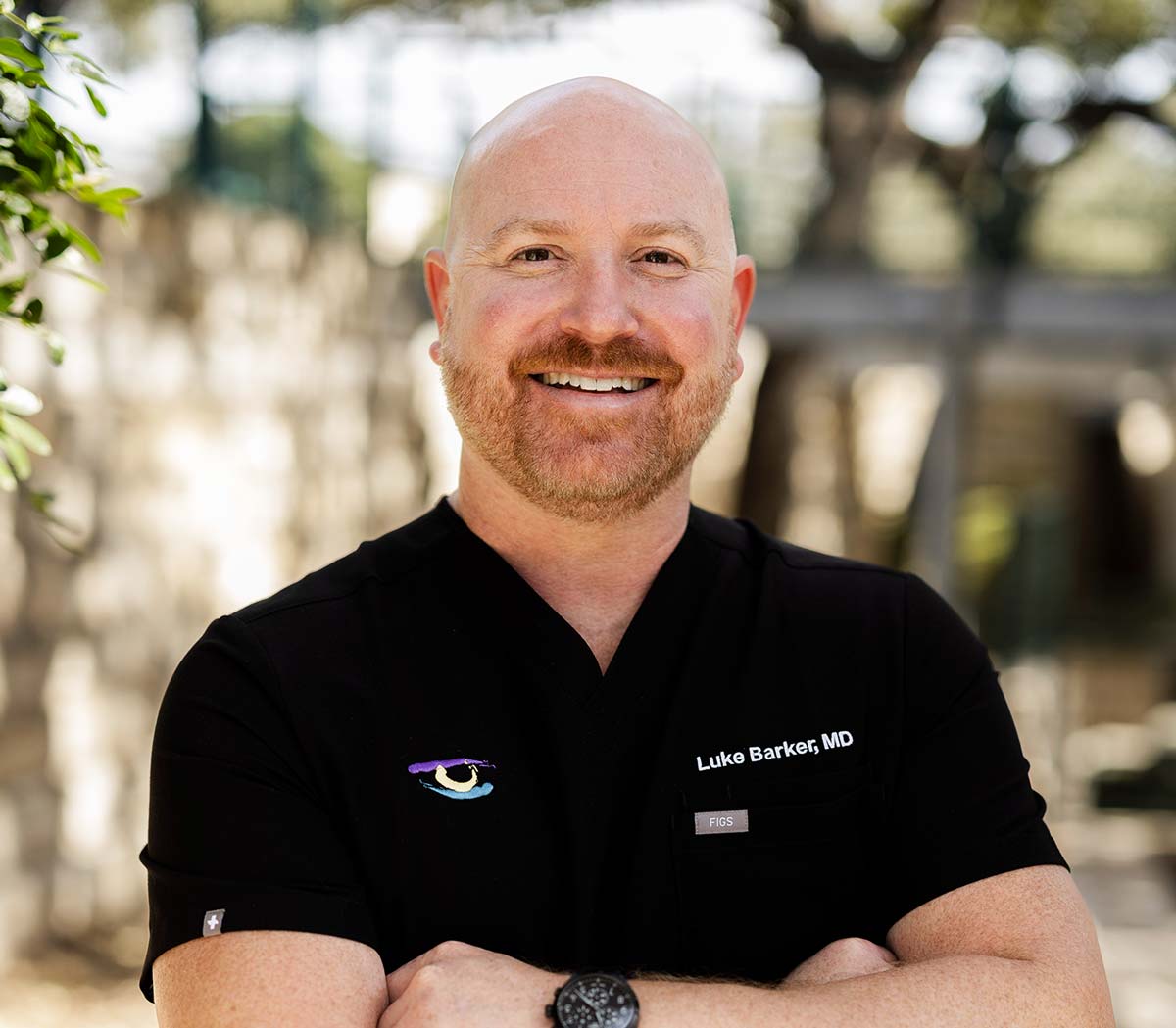
Luke Barker, M.D.
Board-certified Diplomate of the American Board of Ophthalmology, Fellow of the American Academy of Ophthalmology, and member of the American Society of Cataract and Refractive Surgeons. Dr. Barker has performed over 25,000 vision correction procedures and previously served as the lead cataract and refractive surgeon at Mann Eye Institute in Austin for nearly a decade before joining Westlake Eye Specialists in 2025.
Meet Dr. BarkerHow All-Laser Bladeless LASIK Surgery Works
At Westlake Eye Specialists, every LASIK procedure is performed using all-laser, bladeless technology. This distinction matters — it directly affects the precision, safety, and predictability of your outcome. Here's a closer look at what happens during your procedure and why our technology choices matter for your results.
Step 1: Femtosecond Laser Flap Creation
The first phase of LASIK involves creating an ultra-thin, precisely shaped flap in the outer layer of the cornea. In older LASIK techniques, this step was performed with a handheld mechanical blade called a microkeratome. At Westlake Eye Specialists, we use a computer-guided femtosecond laser to create this flap — eliminating the blade entirely.
The femtosecond laser delivers pulses of light at one-quadrillionth of a second, creating microscopic bubbles at a precise depth within the corneal tissue. These bubbles form a plane of separation that defines the flap. The result is a flap with remarkably uniform thickness, a precisely engineered hinge position, and smooth edges — all factors that contribute to better healing and more predictable visual outcomes.
Step 2: Excimer Laser Vision Correction
Once the corneal flap is gently lifted, an excimer laser reshapes the underlying corneal tissue according to your unique prescription. The excimer laser removes microscopic amounts of tissue with extraordinary accuracy — each pulse reshapes approximately 0.25 microns of tissue (for reference, a human hair is about 70 microns thick).
This reshaping is guided by a wavefront map of your eye — a detailed analysis that captures optical imperfections far beyond what a standard glasses prescription measures. The result is a customized correction that not only addresses your nearsightedness, farsightedness, or astigmatism but can also reduce higher-order aberrations that affect the quality of your vision, particularly in low-light conditions.
Step 3: Flap Repositioning and Natural Healing
After the cornea has been reshaped, your surgeon gently repositions the flap. It adheres naturally within minutes — no stitches, no sutures, no bandage. The corneal flap acts as a natural biological dressing, which is one of the reasons LASIK recovery is so remarkably fast compared to surface procedures like PRK.
Why Bladeless Matters for Your Results
Femtosecond laser flap creation produces more consistent flap thickness, reduces the risk of flap-related complications, and enables treatment of patients with thinner corneas who might not have been candidates with older technology. For patients choosing LASIK in Austin, South Austin, or anywhere in the Westlake Hills area, this means access to the same laser platform used at the top refractive surgery centers in the country.
Pre-Operative Diagnostics: The Pentacam® and Beyond
Exceptional LASIK results begin long before you enter the laser suite. At Westlake Eye Specialists, your pre-operative evaluation includes a battery of advanced diagnostic tests that give your surgeon a comprehensive understanding of your eye's unique anatomy. The Pentacam® corneal tomographer provides a detailed 3D map of your anterior segment — analyzing corneal thickness, curvature, and elevation data across the entire corneal surface. Combined with wavefront aberrometry, pachymetry readings, pupil size measurement, and a thorough tear film assessment, this data allows your surgeon to design a truly customized treatment plan and determine with confidence whether LASIK — or an alternative procedure — will give you the best result.
Your LASIK Journey at Westlake Eye Specialists
From your first phone call to visual freedom, here's what to expect every step of the way.
Comprehensive Evaluation
Advanced corneal mapping, Pentacam® analysis, wavefront aberrometry, and tear film assessment at our Westlake Austin clinic. We determine if LASIK — or an alternative — is right for your eyes.
Custom Treatment Plan
Your surgeon reviews diagnostics and designs a personalized surgical plan. You'll understand your expected outcomes, timeline, and costs before making a decision.
All-Laser LASIK Surgery
Performed at our South Austin surgical center. Femtosecond laser creates the flap; excimer laser reshapes the cornea. Both eyes in ~15 minutes. No blades, no stitches.
Clear Vision & Follow-Up
Most patients see dramatically better within hours. Next-day check, then follow-ups at 1 week and 1 month to ensure optimal healing and visual outcomes.
Are You a Candidate for LASIK in Austin?
LASIK delivers extraordinary results, but it's not the right procedure for every patient. A thorough candidacy evaluation is the single most important step in the LASIK process — and at Westlake Eye Specialists, our evaluation is the most comprehensive you'll find in the Austin area. We'd rather tell you honestly that another procedure is a better fit for your eyes than perform LASIK on a patient who would get a superior result from EVO ICL or Refractive Lens Exchange.
Ideal LASIK Candidates
- Stable vision prescription for at least 12 months with no significant changes
- Nearsightedness, farsightedness, or astigmatism within treatable ranges
- Adequate corneal thickness to safely allow laser tissue reshaping
- No active eye disease such as keratoconus, uncontrolled glaucoma, or corneal dystrophies
- Age 18 or older — results are typically best in the mid-twenties and beyond when prescriptions have fully stabilized
- Healthy ocular surface without severe dry eye disease
- Realistic expectations about LASIK outcomes and limitations
You May Be Better Suited for an Alternative
- Very high prescription — EVO ICL can correct severe myopia up to -20.00D without removing any corneal tissue
- Thin corneas — EVO ICL preserves all corneal tissue, or PRK requires less corneal thickness than LASIK since no flap is created
- Significant dry eye — our Austin Dry Eye Center can evaluate and treat your dry eye first, or recommend an alternative that doesn't exacerbate dryness
- Over 45 with presbyopia — Refractive Lens Exchange (RLE) can address both distance vision and near-vision changes in a single procedure, potentially preventing the need for future cataract surgery
- Active in contact sports or military — PRK offers the same visual outcomes as LASIK without creating a corneal flap, making it the preferred choice for high-impact lifestyles
Not Sure If You Qualify?
Our free Vision Correction Self-Test takes just a few minutes and gives you a preliminary assessment of your candidacy before scheduling a consultation.
Take the Self-TestOr call us at (512) 472-4011
Contact Lens Wearers: Important Note
If you wear contact lenses, you'll need to switch to glasses before your LASIK evaluation to allow your corneas to return to their natural shape. Soft lens wearers should stop wearing contacts at least 7 days before the consultation. Rigid gas-permeable lens wearers should allow 2–3 weeks. This ensures your diagnostic measurements are accurate.
LASIK vs. Alternatives: Which Is Right for You?
Westlake Eye Specialists offers every major vision correction procedure so your surgeon can recommend what's genuinely best for your eyes — not just what happens to be available.
| Procedure | How It Works | Best For | Recovery |
|---|---|---|---|
| LASIK | Femtosecond laser creates a corneal flap; excimer laser reshapes underlying tissue | Mild to moderate myopia, hyperopia, astigmatism | 1–2 days |
| PRK | Surface ablation — cornea reshaped directly without creating a flap | Thin corneas, active lifestyles, military/first responders | 5–7 days |
| EVO ICL | Biocompatible implantable collamer lens placed behind the iris, in front of the natural lens | High prescriptions, thin corneas, dry eye, reversible option | 1–2 days |
| RLE | Natural lens replaced with a premium IOL (same technique as cataract surgery) | Age 45+, presbyopia, early lens changes, eliminates future cataract need | 2–4 days |
Explore all LASIK alternatives offered at Westlake Eye Specialists.
EVO ICL: The Leading Alternative to LASIK
For patients who aren't ideal candidates for LASIK, EVO ICL (Implantable Collamer Lens) has emerged as one of the most compelling alternatives available. Unlike LASIK, which permanently removes corneal tissue, EVO ICL works by placing a thin, biocompatible lens behind the iris and in front of your natural lens. The procedure is additive rather than subtractive — nothing is removed from your eye.
This makes EVO ICL particularly well-suited for patients with high levels of myopia (up to -20.00D), thin corneas, or significant dry eye. Because no corneal tissue is removed, EVO ICL doesn't exacerbate dryness the way LASIK can in some patients. And because the lens can be removed if needed in the future, it's a reversible procedure — a feature no laser-based correction can offer.
Refractive Lens Exchange: Vision Correction for Patients Over 45
Refractive Lens Exchange (RLE) uses the same technique as modern cataract surgery — replacing the natural lens with a premium intraocular lens implant — but it's performed before a cataract has developed. For patients over 45 who are experiencing presbyopia (the need for reading glasses) alongside distance vision issues, RLE offers a powerful advantage: it can correct both near and distance vision in a single procedure, and because the natural lens has been replaced, the patient will never develop cataracts in the future.
Our surgeons offer the full range of premium IOLs for RLE patients, including the Light Adjustable Lens, multifocal lenses, and extended depth-of-focus lenses.
LASIK Cost in Austin, TX
LASIK cost is one of the most common questions Austin patients have — and one of the most important. At Westlake Eye Specialists, we believe in complete transparency: you should know exactly what your LASIK investment includes before you commit, with no surprise fees or hidden charges after the fact.
The cost of LASIK in Austin varies from practice to practice, and the lowest advertised price is rarely the best value. Some practices quote per-eye rates that exclude pre-operative diagnostics, post-operative visits, enhancement coverage, or surgeon fees. Others may use older blade-based technology to keep costs down at the expense of precision and safety. At Westlake Eye Specialists, your LASIK price includes everything — and the procedure is always performed with all-laser bladeless technology by a board-certified surgeon.
Use our LASIK Pricing Calculator to get a personalized estimate based on your prescription and vision goals. We also offer flexible financing options with low monthly payments, making visual freedom more accessible than the ongoing cost of glasses, contacts, solution, and annual eye exams.
Is LASIK Worth the Investment?
Consider what you currently spend on vision correction each year — frames, lenses, contact lens subscriptions, cleaning solution, backup glasses, annual exams. For most patients, LASIK pays for itself within three to five years. And unlike glasses and contacts, the results are permanent. Whether you're an avid runner on the Lady Bird Lake trail, a weekend golfer at Barton Creek, a swimmer at Barton Springs, or simply tired of fogged-up lenses in Austin's humidity, LASIK fundamentally changes how you experience daily life.
Get Your Price EstimateYour LASIK Price Includes:
LASIK Recovery: What to Expect After Surgery
One of the most remarkable aspects of modern LASIK is how quickly patients recover. The vast majority of Austin LASIK patients are back to their normal routines within a day or two, and many describe waking up the morning after surgery and seeing clearly for the first time without reaching for their glasses as a genuinely life-changing moment.
The First 24 Hours
Immediately after your LASIK procedure at our South Austin surgical center, you may experience mild tearing, light sensitivity, and a slight sandy or gritty sensation in your eyes. These symptoms are normal and typically resolve within a few hours. We recommend going directly home, keeping your eyes closed, and resting for the remainder of the day. Many patients nap for a few hours after surgery and wake up already noticing significantly clearer vision.
You'll need someone to drive you home after the procedure. We'll provide protective eye shields to wear while sleeping during the first week to prevent accidental rubbing, along with medicated drops to support healing and comfort.
Days 2–7: Getting Back to Normal
Most patients return to desk work and normal daily activities within one to two days. You'll have a follow-up appointment the day after surgery to check your healing and early visual results. During the first week, you should avoid rubbing your eyes, wearing eye makeup, swimming, and using hot tubs. Artificial tears should be used frequently to keep the eyes comfortable and well-lubricated.
Weeks 2–4: Vision Stabilization
Your vision will continue to sharpen and stabilize over the first several weeks. Most patients notice incremental improvements throughout this period. You'll have follow-up visits at approximately one week and one month post-surgery. By the one-month mark, most patients have achieved their final visual acuity and are fully cleared for all activities, including contact sports and swimming.
Long-Term Results
LASIK permanently reshapes your cornea, and the vision correction is lasting. However, LASIK cannot prevent natural age-related changes. Patients who have LASIK in their twenties or thirties will still experience presbyopia (the need for reading glasses) around age 40–45, and cataracts may eventually develop later in life. Both of these can be addressed when the time comes — presbyopia with reading glasses, and cataracts with cataract surgery using premium lens implants.
LASIK Frequently Asked Questions
Does LASIK hurt?
No. Numbing drops are applied before the procedure, so you won't feel pain during the laser treatment. Most patients describe a mild pressure sensation lasting a few seconds during flap creation. After surgery, mild dryness and light sensitivity may occur for a day or two, but significant discomfort is uncommon.
How long does LASIK surgery take?
The laser treatment itself takes only seconds per eye. The entire procedure for both eyes is about 15 minutes. Your total visit at our South Austin surgical center — including preparation, the procedure, and a brief post-operative check — is typically under an hour.
How soon will I see clearly after LASIK?
Most patients notice dramatically improved vision within hours of the procedure. Vision continues to sharpen over the first few days and weeks, and most people are back at work within one to two days.
Is LASIK permanent?
LASIK permanently reshapes the cornea, and the vision correction is lasting. It will not prevent age-related changes like presbyopia (reading glasses after 40) or cataracts, but those can be addressed with other procedures like cataract surgery when the time comes.
What's the difference between bladeless and traditional LASIK?
Traditional LASIK uses a mechanical blade (microkeratome) to create the corneal flap. Bladeless LASIK — the only type performed at Westlake Eye Specialists — uses a femtosecond laser, delivering more uniform flap thickness, greater precision, and reduced flap complications.
How much does LASIK cost in Austin?
LASIK cost varies by practice depending on the technology used, surgeon experience, and what's included. Our pricing includes comprehensive diagnostics, the all-laser procedure, surgeon fees, and all follow-up care — no hidden costs. Use our LASIK Pricing Calculator for a personalized estimate, and explore financing options.
What if I'm not a candidate for LASIK?
Not qualifying for LASIK doesn't mean visual freedom is off the table. EVO ICL is an excellent option for patients with very high prescriptions, thin corneas, or significant dry eye. PRK delivers the same long-term results as LASIK without creating a corneal flap — ideal for thin corneas or active lifestyles. Refractive Lens Exchange is ideal for patients over 45 who want to correct both distance and near vision. Our surgeons will recommend the procedure that gives you the best long-term result. See all LASIK alternatives.
Can I have LASIK if I have dry eyes?
It depends on the severity. Mild dry eye can often be managed with treatment before and after LASIK. Our Austin Dry Eye Center can evaluate and treat dry eye as part of your candidacy evaluation. More significant dry eye may make EVO ICL a better option, since it doesn't involve corneal tissue removal.
Will I still need reading glasses after LASIK?
LASIK corrects your current refractive error but cannot prevent presbyopia — the natural loss of near-focusing ability that typically begins around age 40–45. If you're under 40, you'll likely need reading glasses at some point in the future. If you're already over 40, your surgeon can discuss options like monovision LASIK or Refractive Lens Exchange to address both distance and near vision.
How do I prepare for my LASIK consultation?
If you wear soft contact lenses, stop wearing them at least 7 days before your evaluation. Rigid gas-permeable lens wearers should stop 2–3 weeks in advance. Bring your current glasses, a list of medications, and any questions you have. You can start with our Vision Correction Self-Test to get a preliminary assessment before your visit.
LASIK Consultations Across Central Texas
Pre-operative evaluations available at all locations. All LASIK procedures are performed at our state-of-the-art South Austin surgical center.
Ready to See Austin Without Limits?
Schedule your LASIK consultation and find out if all-laser vision correction is right for you.
(512) 472-4011