

Why We Treat Glaucoma Earlier
Our founder and medical director, Dr. Zarmeena Vendal, was recently invited onto Ophthalmology 360’s Spotlight Series podcast to talk with host Mario Nacinovich about one of the biggest shifts in eye care today: treating glaucoma earlier, rather than waiting for it to force our hand.
It’s a conversation aimed at her fellow physicians, but the ideas in it matter enormously to patients. So we’ve translated the highlights into plain language for the people we care for every day across Central Texas — including a question we get asked all the time: why does Westlake so often recommend a laser before reaching for another bottle of drops?
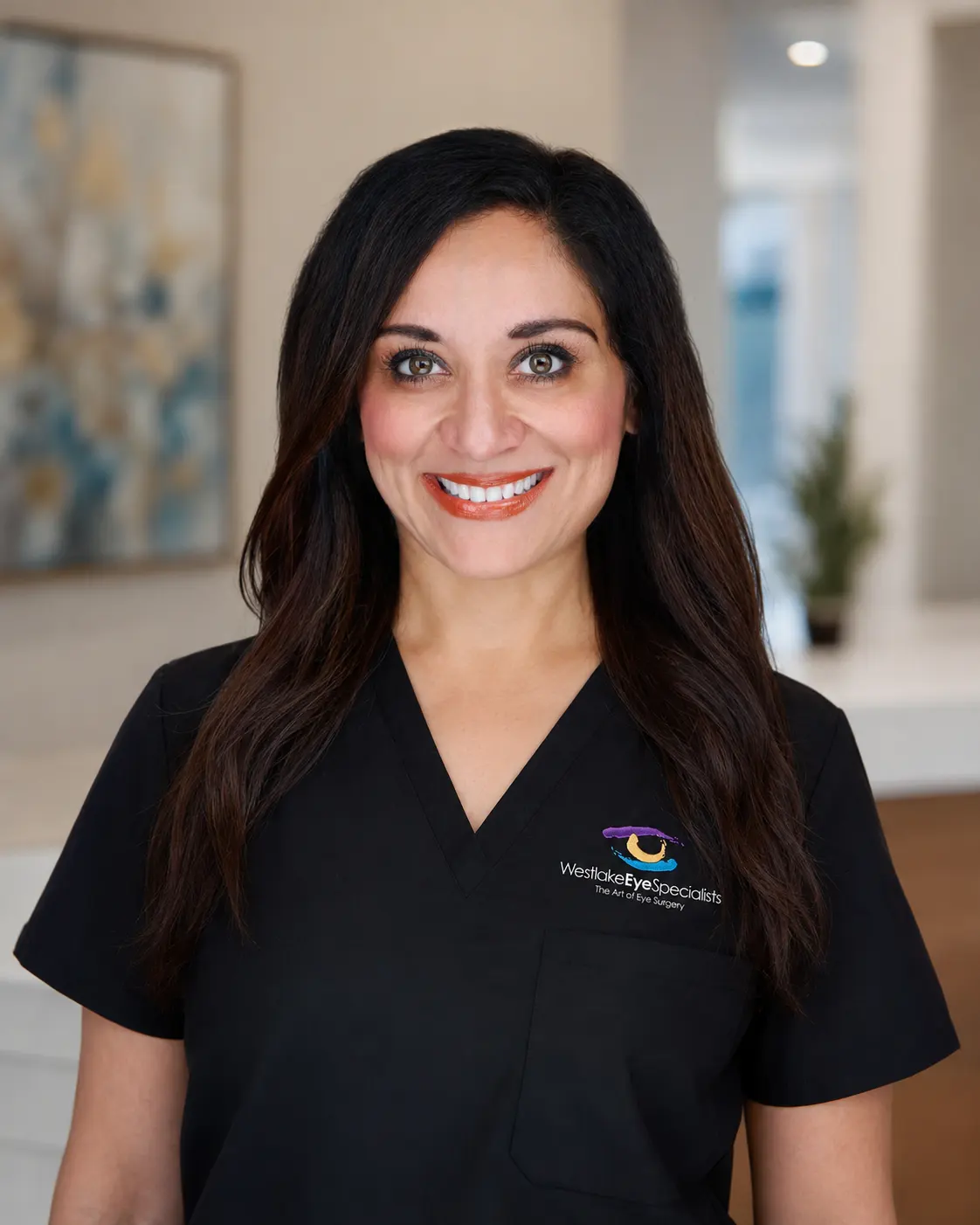
The Future of Vision… Today!
The old model: wait, watch, and add another drop
For much of the history of glaucoma care, treatment followed a stepwise script. Start with a drop. If pressure crept up, add a second drop. Then a third. Surgery was held in reserve for later, once the disease had already advanced.
Dr. Vendal traces her discomfort with that model all the way back to her fellowship training at Mass Eye and Ear in Boston. She kept seeing patients whose treatment only intensified after something had already been lost — a change in the optic nerve, a defect in the visual field. The care was real, but it was reactive. It arrived after the fact.
That question — why are we waiting? — has shaped how she has practiced ever since.

Why we lead with laser
At Westlake, this isn’t just one physician’s preference. It’s a practice-wide policy, and it’s worth explaining plainly, because patients notice it.
We have five locations and a team that includes comprehensive ophthalmologists and optometrists alongside Dr. Vendal. Every one of those providers has been trained to counsel glaucoma the same way: discuss laser first. Not as one item on a menu of equally weighted choices, but as a genuine recommendation — the option Dr. Vendal says she would choose for her own eyes.
Two things drove that decision.
Patients asked for it first
Long before the evidence caught up, Dr. Vendal was hearing the same things in the exam room. Patients with dry eye wanted fewer drops on an already irritated ocular surface. Contact lens wearers wanted a treatment that didn’t complicate their day. Busy professionals wanted something that didn’t depend on remembering a bottle at the same hour every night. Listening to those daily frustrations, she says, was the first real turning point.
Then the evidence arrived
The second turning point was the LiGHT trial, published over seven years ago. It confirmed with hard data what many clinicians had suspected anecdotally: patients treated first with selective laser trabeculoplasty (SLT) were less likely to progress to needing glaucoma surgery than those started on drops. In Dr. Vendal’s words, that removed the last excuse not to be interventional.
More recently, five-year data from the HORIZON study pointed in a similarly encouraging direction, showing less visual field progression among patients who received an interventional treatment. And for a disease whose entire purpose in treating is to protect sight, that’s the outcome that matters most. Pressure numbers are a means to an end. A visual field that holds steady is the end itself.
The snapshot problem
Here’s something patients rarely hear explained, and it reframes a lot of what follows.
When we check your eye pressure at an appointment, we’re capturing a single moment — a spot check, usually in the middle of a weekday morning or afternoon. But eye pressure isn’t a fixed number. It rises and falls across the day and through the night, a pattern called diurnal variation. Your reading can look reassuring at 10 a.m. and behave very differently at 3 a.m.
This is a genuine concern in our practice, and it’s one of the strongest arguments for treatments that work continuously rather than in doses. A drop delivers a peak and then fades. An implant that releases medication steadily, or a procedure that improves the eye’s own drainage, is working at every hour — including all the hours we never get to measure.
A wide toolbox, not a favorite tool
Dr. Vendal draws a sharp distinction between glaucoma and other areas of eye surgery. With a lens implant, a surgeon may settle on one favorite and use it consistently. Glaucoma doesn’t work that way. It’s a chronic disease we may be managing alongside you for thirty or forty years, and that long partnership requires options.
Here’s how the main categories fit together:
| Approach | What it does |
|---|---|
| SLT laser | A few minutes in the office, no incision. Encourages the eye’s natural drainage system to work more efficiently. Often our first recommendation. |
| MIGS | Gentle, minimally invasive procedures that physically improve how fluid leaves the eye. Frequently combined with cataract surgery. |
| Sustained drug delivery | A small implant releasing glaucoma medication steadily over an extended period — including the iDose® TR and Durysta® implants. |
| ECP & diode laser | Additional less-invasive options Dr. Vendal keeps in reserve for more advanced or difficult-to-control cases, or when other treatments haven’t held. |


One point she made deserves emphasis, because it surprises patients: these often aren’t either/or decisions. She’ll frequently combine a MIGS procedure with a sustained-delivery implant in the same setting, because they work through completely different mechanisms — one changes the eye’s plumbing, the other supplies medication around the clock. Used together, they offer broader coverage than either alone.
What patients actually think about implants
Dr. Vendal admits she expected hesitation. Placing an implant inside someone’s eye, where it will remain, is a significant thing to propose — and she wondered whether patients would balk.
They haven’t. After roughly 150 iDose implants, she describes the response as a genuine and pleasant surprise. She still recalls asking one of her earliest implant patients what made her say yes. The answer came in two parts: her family had looked up the technology and found it to be among the newest options available for glaucoma, and her own doctor had told her it was the right choice for her.
That combination — meaningful innovation, delivered by a physician the patient trusts — is, in Dr. Vendal’s view, the whole story of how patients make these decisions.
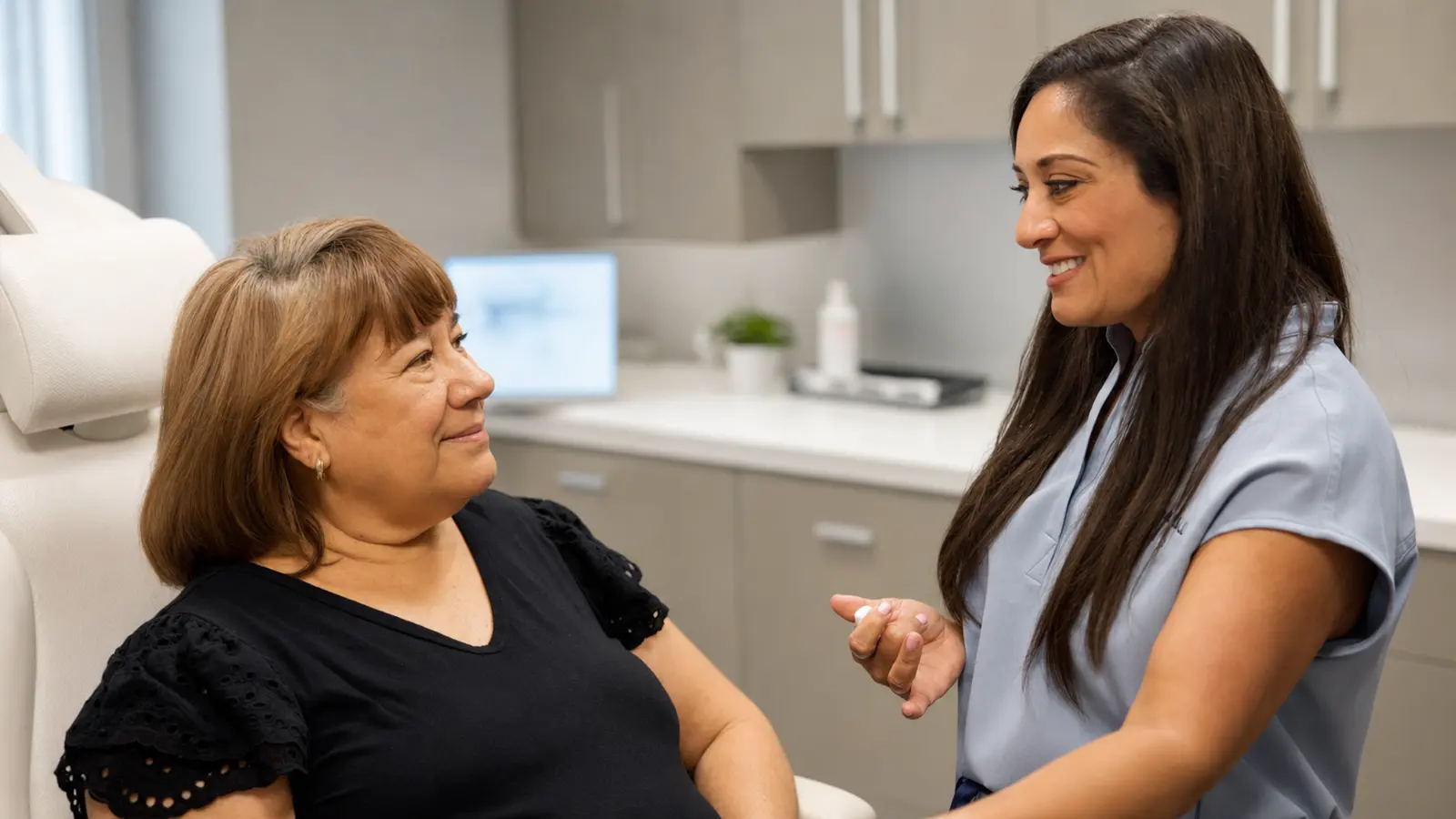
The adherence reality nobody enjoys discussing
If there was a sobering note in the conversation, it was this one.
Decades of research have established that sticking with daily glaucoma drops is genuinely hard. Not because patients don’t care — because life is complicated and the routine is relentless. What Dr. Vendal describes as eye-opening is how consistent that struggle turns out to be. It doesn’t vary meaningfully based on whether the prescribing doctor is an optometrist, a comprehensive ophthalmologist, or a fellowship-trained glaucoma specialist.
She also referenced a large industry chart review suggesting that patients managed on topical therapy alone were considerably more likely to fall out of regular follow-up altogether than patients who had received an interventional treatment. Her interpretation is worth sitting with: there may be something about the daily grind of a multi-drop regimen that quietly erodes a person’s engagement with their own care — while an intervention seems to do the opposite, giving patients a sense of active partnership in managing the disease.
Her practical observation from the exam room: when the burden drops, participation rises. Patients who’ve had an intervention are often more reliable about the one remaining drop than they ever were about three.
Who might be a candidate?
Dr. Vendal described the profiles she watches for. If you recognize yourself in one of these, it’s worth raising at your next visit:
- Anyone with dry eye or ocular surface irritation, where daily drops may be adding to the problem rather than solving it.
- Anyone whose lifestyle or work makes a strict daily schedule difficult — travel, shift work, or simply a life that doesn’t run on a fixed clock.
- Anyone already scheduled for cataract surgery. She calls this a home run: we’re already operating, so glaucoma treatment can often be addressed in the same session.
- Anyone whose earlier pressure control is beginning to fade — particularly after cataract surgery, where restarting drops risks undoing hard-won comfort and vision quality.
- Anyone newly diagnosed who hasn’t started drops yet, and would prefer not to if there’s a reasonable alternative.
Where we heard this: Dr. Vendal was a guest on The Spotlight Series Podcast from Ophthalmology 360, hosted by Mario Nacinovich, in an episode titled “Redefining earlier intervention and long-term disease management in glaucoma.” We’ve paraphrased her clinical remarks here for a patient audience.
Please note: this article is general education, not medical advice, and the studies referenced describe group results rather than any individual’s expected outcome. Every treatment decision should be made with your own physician.
Where this is heading
Asked to look ahead, Dr. Vendal expects the direction of travel to continue: practices striving to be as dropless as the evidence allows, more medications available in sustained-delivery form, and these options offered earlier and earlier in the glaucoma journey rather than held back until cataract surgery or until drops have visibly failed.
Her closing message to colleagues was an encouragement not to wait — and to recognize that glaucoma care no longer belongs exclusively to fellowship-trained specialists. For patients, the takeaway is simpler and more hopeful: the tools available to protect your vision are safer, gentler, and available sooner than they were even a few years ago.
Every eye is different
None of this is one-size-fits-all, and nothing here should be read as a reason to change your treatment on your own. Drops remain an important and effective part of care for many patients, and the right path for you depends on your type and stage of glaucoma, your pressures, your ocular surface health, your other eye conditions, and your own goals.
What has changed is the size of the conversation. There are simply more options on the table now than there were, and more reason to have that discussion earlier. If you’re curious whether a more proactive approach fits your situation, it starts with a personalized glaucoma evaluation — right here, with the team you already know.
Frequently asked questions
Why would my doctor recommend laser before eye drops?
Research including the LiGHT trial found that patients treated first with selective laser trabeculoplasty were less likely to go on to need glaucoma surgery than those started on drops alone. At Westlake Eye Specialists, every provider is trained to discuss laser as a first-line option — though the final decision always reflects your own preferences and circumstances.
Can more than one glaucoma treatment be combined at once?
Often, yes. Dr. Vendal frequently pairs minimally invasive glaucoma surgery with a sustained drug-delivery implant rather than choosing between them, because the two work in different ways — one improves the eye’s drainage structure while the other delivers medication continuously. Combinations are also commonly performed at the time of cataract surgery.
What is diurnal variation in eye pressure?
Eye pressure naturally rises and falls throughout the day and night, which is called diurnal variation. Because an office visit only captures a single snapshot, treatments that work continuously around the clock can provide steadier control than a drop taken once or twice daily.
Am I too early in my glaucoma journey for an interventional treatment?
Possibly not. One of the central ideas of interventional glaucoma is that today’s gentler options can be offered earlier rather than held in reserve. Candidacy depends on your type and stage of glaucoma, your pressures, your ocular surface health, and your lifestyle — all of which are reviewed during a personalized evaluation.
Will I still need check-ups after an interventional treatment?
Yes. Glaucoma is a lifelong condition, and ongoing monitoring of your eye pressure and optic nerve remains essential no matter which treatments you have had. Interventional options are designed to reduce the daily burden of care — not to replace regular follow-up with your eye doctor.
Is it time to have a different conversation?
The Future of Vision… Today!
Schedule a personalized glaucoma evaluation with the Westlake Eye Specialists team and find out whether a more proactive approach fits where you are in your journey.
Disclosure: Dr. Vendal serves as a consultant and medical advisory board member for several companies in the interventional glaucoma space, including manufacturers of devices and implants referenced in this article.
This content is provided for general educational purposes and does not constitute medical advice, diagnosis, or a treatment recommendation. Individual results vary. Please consult your physician regarding your specific condition.