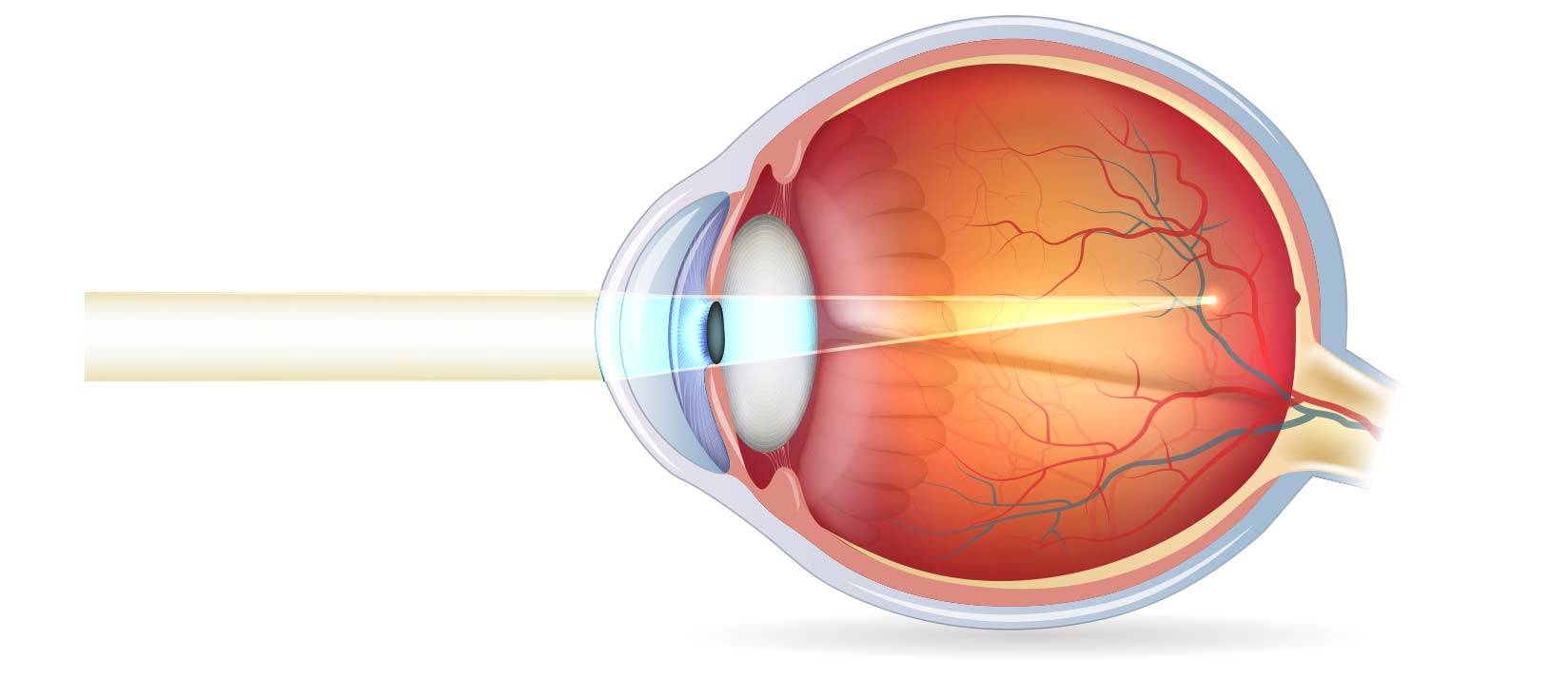
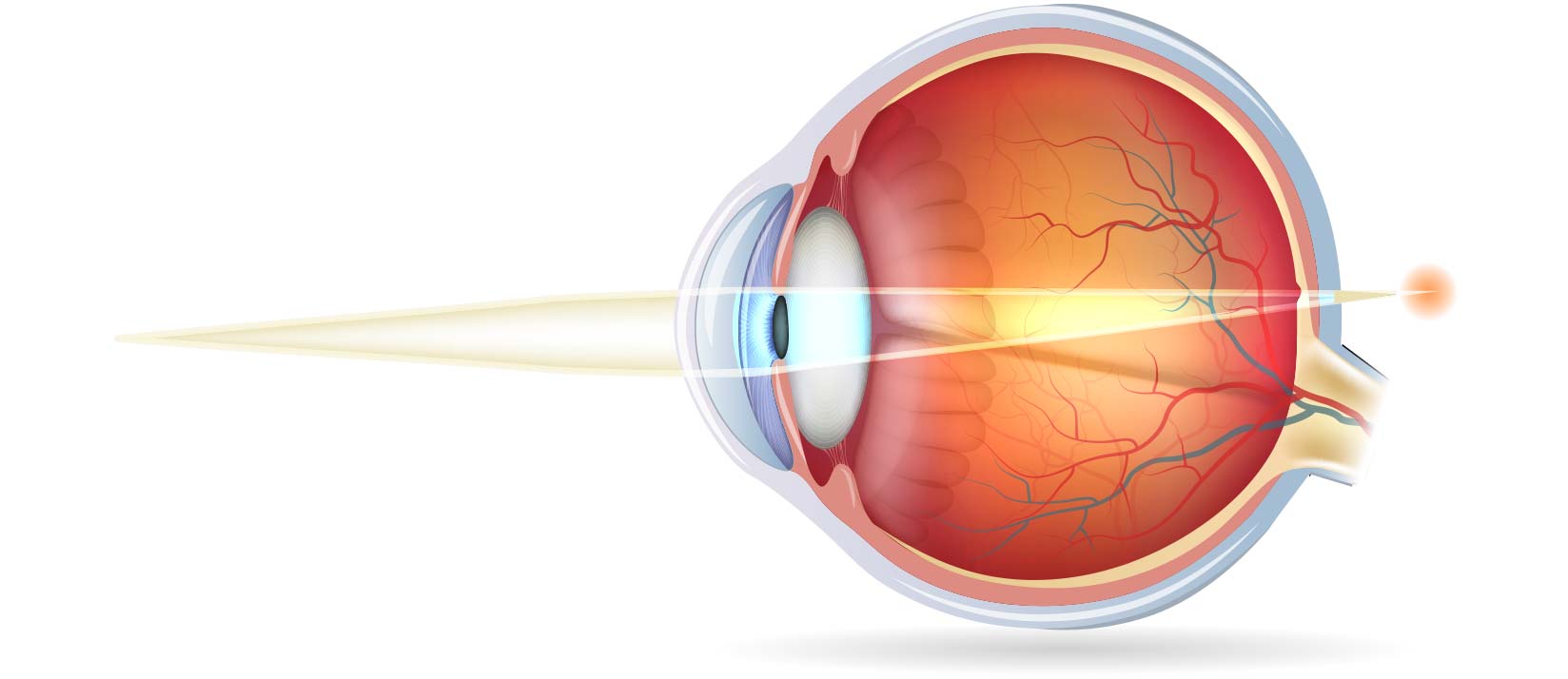
Myopia occurs when the cornea and lens focus light in front of the retina instead of right on it. The resulting image is blurry, and vision correction with glasses or contacts is necessary.
Causes
Cornea is too steep
Lens is too powerful
Symptoms
Blurry vision at distance
Typically clear vision up close
Treatment
Once the exact prescription is determined, myopia can be corrected in a variety of ways including:
Glasses
Soft and hard contact lenses
Refractive surgery
PRELEX
Hyperopia (Farsightedness)
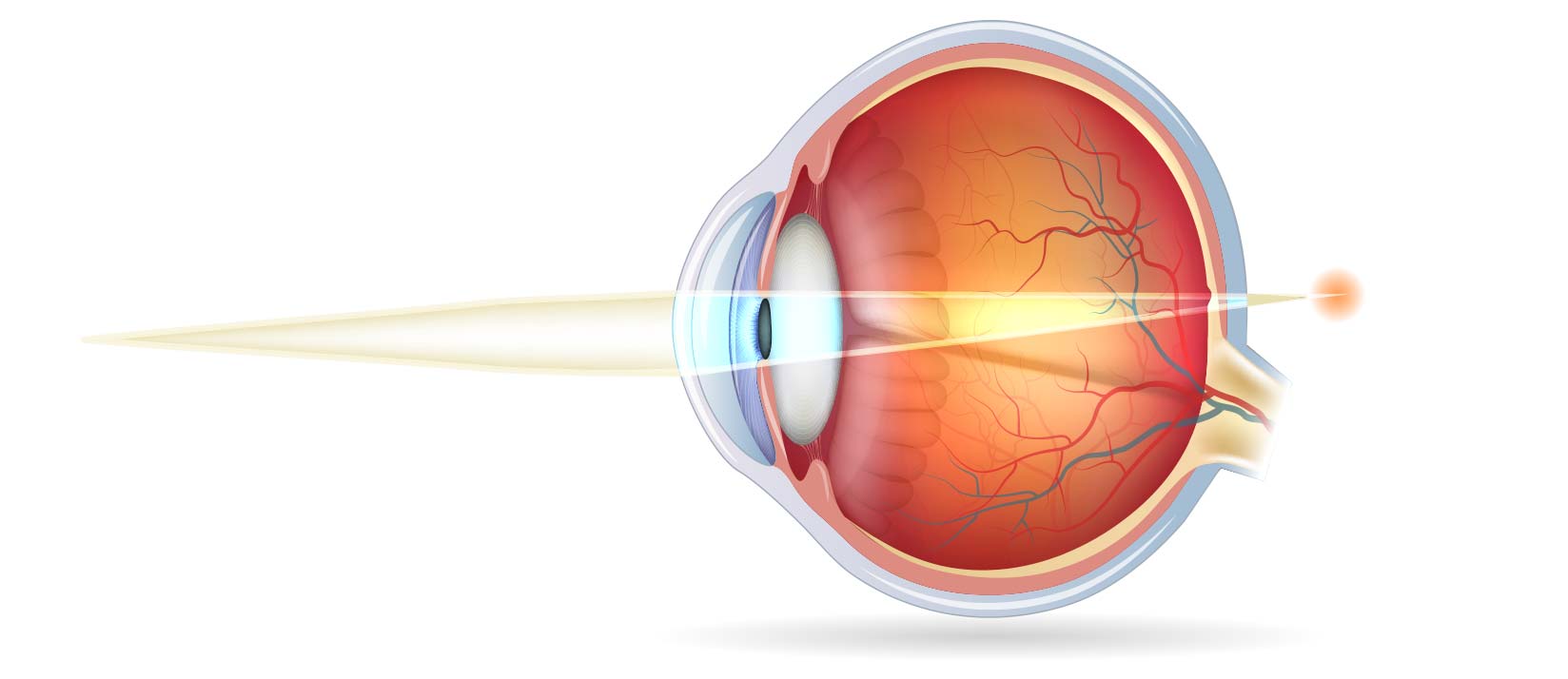
Hyperopia occurs when the cornea and lens focus light behind the retina instead of right on it. The resulting image is blurry, and vision correction with glasses or contacts is necessary.
Causes
Cornea is too flat
Lens is too weak
Symptoms
Blurry vision at near
Typically clear vision at a distance
Diagnosis
A comprehensive eye exam with refraction will help to detect hyperopia in children and adults at any age.
Treatment
Once the exact prescription is determined, hyperopia can be corrected in a variety of ways including.
Glasses
Soft and hard contact lenses
Refractive surgery
Astigmatism
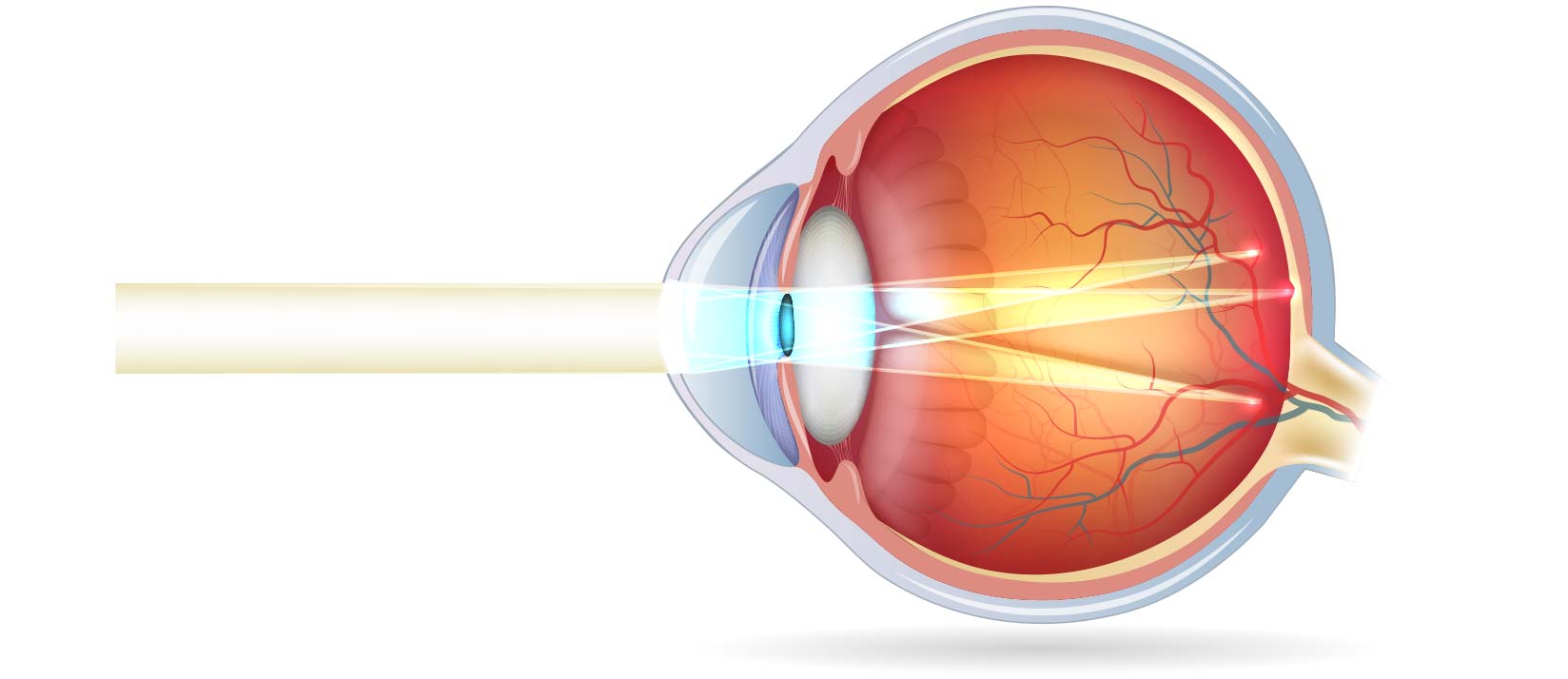
Astigmatism occurs when the cornea is more oval or football shaped instead of being a perfect sphere. The resulting vision is often blurry and distorted. Mild forms of astigmatism my not need correction, but the stronger the prescription gets, the more patients become dependent on glasses to see.
Causes
Natural shape of the cornea or lens
Trauma, scarring
Infections
History of eye surgery
Symptoms
Distorted vision at distance or near
Diagnosis
A comprehensive eye exam with refraction will help to detect astigmatism in children and adults at any age
Treatment
Once the exact amount of astigmatism is determined, it is corrected based on severity.
Mild astigmatism may not be noticeable by the patient and can be left uncorrected.
Moderate to severe astigmatism can be corrected with special toric soft contacts or might require rigid gas permeable lenses.
Refractive surgery can be used arcuate incisions can be used.
Refractive surgery can be used arcuate incisions can be used.
Presbyopia
The human lens has a natural ability to change its shape or accommodate in order to focus on objects up close. In our 20’s and 30’s, we are able to accommodate without difficulty. Presbyopia occurs when the lens no longer has the ability to change shape, thereby requiring the use of reading glasses to compensate.
Symptoms
Loss of ability to read or focus on the computer
Preserved distance vision
Eye strain or headache after prolonged concentration up close
Difficulty changing focus from distance to near
Diagnosis
A comprehensive eye exam with attention to vision at distance and near will help diagnose presbyopia; exact prescription needed to correct vision for near will also be calculated.
Treatment
Over-the-counter reading glasses are adequate for those who still have good vision without correction for distance; otherwise bifocal correction is needed and can be achieved through glasses or contacts
PRELEX
Request A Consultation
To request a consultation with Westlake Eye Specialists, please click link below.