

PRK delivers the same lasting visual freedom as LASIK — without creating a corneal flap. Ideal for patients with thin corneas, active lifestyles, or occupations where flap-free correction is preferred.
Eliminates all flap-related risks — perfect for contact sports & active lifestyles.
Identical excimer laser reshaping — 20/20 or better for most patients.
Patients who don’t qualify for LASIK may be excellent PRK candidates.
PRK — photorefractive keratectomy — is a laser vision correction procedure that reshapes the cornea to correct nearsightedness, farsightedness, and astigmatism. It was actually the first laser eye surgery approved by the FDA, predating LASIK by several years, and remains one of the most proven and effective refractive procedures available today.
PRK and LASIK share a common goal: using an excimer laser to reshape the cornea so that light focuses precisely on the retina, producing clear vision without glasses or contacts. The critical difference is how the corneal surface is prepared before the laser does its work.
In LASIK, a femtosecond laser creates a thin flap in the outer layer of the cornea. That flap is lifted, the excimer laser reshapes the tissue underneath, and the flap is repositioned. In PRK, no flap is created at all. Instead, the thin outer layer of the cornea (the epithelium) is gently removed, and the excimer laser reshapes the corneal surface directly. The epithelium then regenerates naturally over several days, aided by a protective bandage contact lens.
Because PRK doesn’t involve creating a corneal flap, it preserves more of the cornea’s structural integrity. This makes PRK an important alternative to LASIK for patients with thinner corneas, patients in occupations where a corneal flap could be displaced by physical impact, and patients who simply prefer a no-flap approach to vision correction.
Both procedures use the same excimer laser to correct your vision. The primary difference is in the surface preparation and the recovery timeline.
The bottom line: PRK and LASIK produce the same long-term visual results. The tradeoff is recovery speed. LASIK patients typically see well within hours, while PRK patients need five to seven days. However, PRK eliminates all flap-related concerns entirely. Your surgeon at Westlake Eye Specialists will help you determine which procedure offers the best safety and visual quality for your eyes.
From pre-operative preparation to your final follow-up, here is exactly what happens during PRK at our Austin surgical center.
Your journey starts with a thorough diagnostic workup, including 3D corneal mapping. This determines whether PRK, LASIK, or another approach is the safest fit for your specific anatomy.
Using numbing drops for complete comfort, your surgeon gently removes the ultra-thin outer layer of the cornea (the epithelium). No corneal flap is created.
The laser precisely reshapes the corneal surface in seconds using your unique wavefront-guided treatment plan—the exact same technology used in our LASIK procedures.
A soft, clear contact lens is placed on the eye to protect the surface and promote comfortable healing. It stays in place for about five to seven days.
PRK at Westlake Eye Specialists is performed exclusively by fellowship-trained, board-certified ophthalmologists with deep refractive expertise.

Board-certified, Harvard-trained ophthalmologist with over two decades of refractive and advanced cataract surgery experience. Voted Austin Top Doc.
Meet Dr. Vendal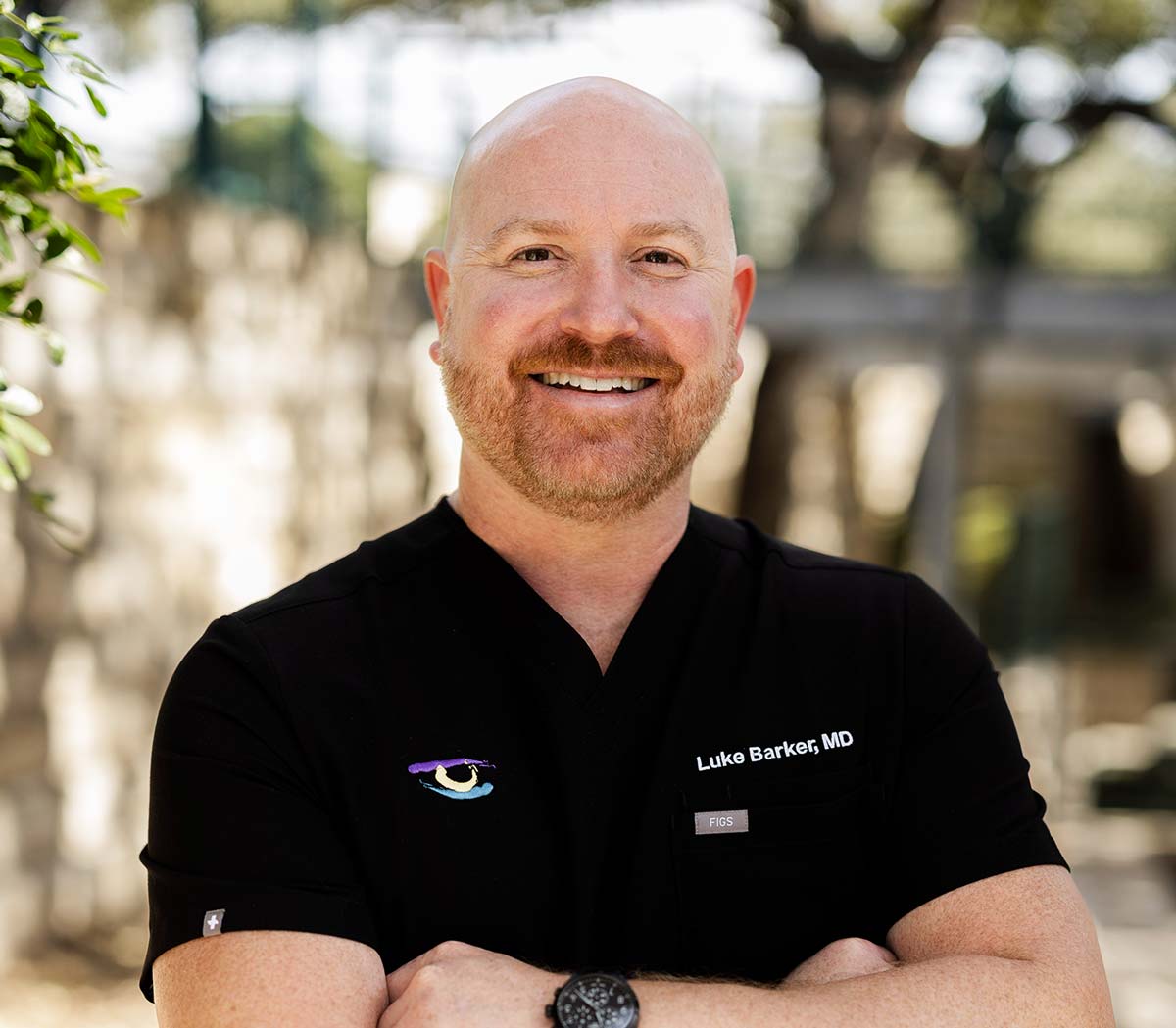
Over 25,000 vision correction procedures performed. Previously the lead refractive surgeon at Mann Eye Institute in Austin for nearly a decade.
Meet Dr. BarkerDuring your evaluation, your surgeon will determine whether PRK, LASIK, or another advanced procedure offers the best outcome for your specific eyes.
The first 2–3 days involve moderate discomfort and light sensitivity. By day 5–7, the bandage lens is removed. Functional vision returns in 2–3 weeks, with full stabilization between 1–3 months.
PRK pricing at Westlake Eye Specialists is comparable to our LASIK pricing and includes comprehensive pre-operative diagnostics, the procedure itself, surgeon fees, all post-operative visits, medicated drops, and the bandage contact lens.
Because PRK and LASIK produce identical long-term visual outcomes, the pricing decision should never drive the clinical choice. We also offer flexible financing options with low monthly payments.
The procedure itself is entirely painless—numbing drops are applied beforehand. During recovery, you’ll experience moderate discomfort for two to three days as the epithelium heals. This is managed with prescribed drops and pain medication. Most patients describe it as a gritty, burning sensation that peaks around day two and improves significantly by day four.
Functional vision (clear enough for driving and daily tasks) typically returns within two to three weeks. Full visual stabilization occurs between one and three months. This is longer than LASIK, but the final visual outcome is exactly the same.
Both procedures have excellent safety profiles. PRK’s primary safety advantage is the elimination of flap-related complications since no flap is created. However, LASIK’s faster healing means less time for potential surface healing complications. Both are incredibly safe when recommended for the right candidate.
Mild dry eye can usually be managed. However, PRK can temporarily worsen dryness during the healing process. Significant dry eye may need to be treated at our Dry Eye Center before proceeding. For patients with severe dry eye, EVO ICL may be a better option.
Plan for five to seven days away from work, especially if your job requires significant screen time or sharp vision. By two weeks, most patients are functioning comfortably in daily life.
Schedule your vision correction consultation and let our board-certified surgeons determine the best path to clear, lasting vision for your eyes.
(512) 472-4011